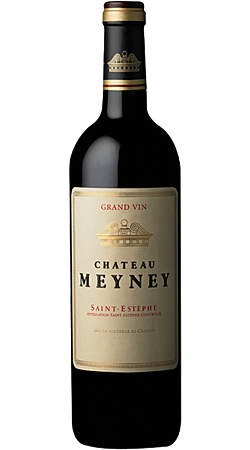
The history of Meyney Castle
Notable works since 1662
It is under the Ancien Régime and in the Médoc region that the history ofMeyney CastleOriginally a convent, the building housed the Feuillant brothers. From 1662 onwards, vines were planted around the estate and cultivated by the monks. Following the French Revolution, Château Meyney was acquired by the Luetkens family. It has been passed down through generations with the shared ambition of striving for the quality of each vintage.
In 1919, Désiré Cordier acquired the property. A renowned merchant in Bordeaux, he was determined to significantly expand the estate's activities. The reputation ofMeyney Castlewill then be increasing. The wines produced at the estate will also be elevated to the rank ofCru Bourgeois Supérieur.
The family's financial difficulties will lead them to sell the property, which will then become part of a cooperative bank's portfolio. Every decision made at the estate contributes to the enhancement of the wine and the terroir.
It's todayAnne Le Naourwho heads the technical department of the estate. She does remarkable work, with the help of the winemaking teamHubert de Boüard.
The terroir of the great wines
The influences of the Gironde
The vineyard ofMeyney CastleOn theSaint-Estèphe appellationThe domain extends over51 hectares, in one piece. Not far from the Gironde, the grape varieties of cabernet sauvignon (60%), merlot (30%) and petit verdot (10%) are protected from climatic hazards and hail in particular.
The vines are planted in a layer of siliceous gravel overlying a subsoil of blue clay three meters thick.Meyney CastleIt is fortunate to have a terroir that is similar in composition to the soil of the Pétrus vineyard. Located on a slope, the soil drainage occurs naturally.
At the château, viticulture is practiced in areasoned and traditionalPruning and green operations are therefore essential. Each vine can then concentrate the aromas of the terroir in the best berries.
The return to the elites of the left bank
Consistent quality across vintages
The harvest begins at the end of August. The grapes are hand-picked and placed on sorting tables. The estate carries out two selections to retain only the best berries. Vinification takes place in temperature-controlled stainless steel and concrete tanks. Aging occurs in oak barrels, 50% of which are new, for a period of 18 to 24 months.
Each grape variety from vines of the same age is vinified separately. As a result, the unique expression of the terroir is preserved until the final stage: blending. This isDenis Rataud, cellar master, who orchestrates each step. Assisted byHubert de Boüard, a renowned consulting oenologist in the region, together they create each vintage of theMeyney CastleA first wine and a second wine, Prieur de Meyney, created in 1979 and made from the youngest vines; form the tandem of theMeyney Castle.
SinceAnne Le NaourHaving taken the reins of the estate, a return to favor with the elites of the Left Bank is noticeable. On tasting, the wines are powerful, aromatic, and structured. Their price-to-pleasure ratio is particularly admirable.